Buying An Equestrian Property In Woodside
June 4, 2026
June 4, 2026
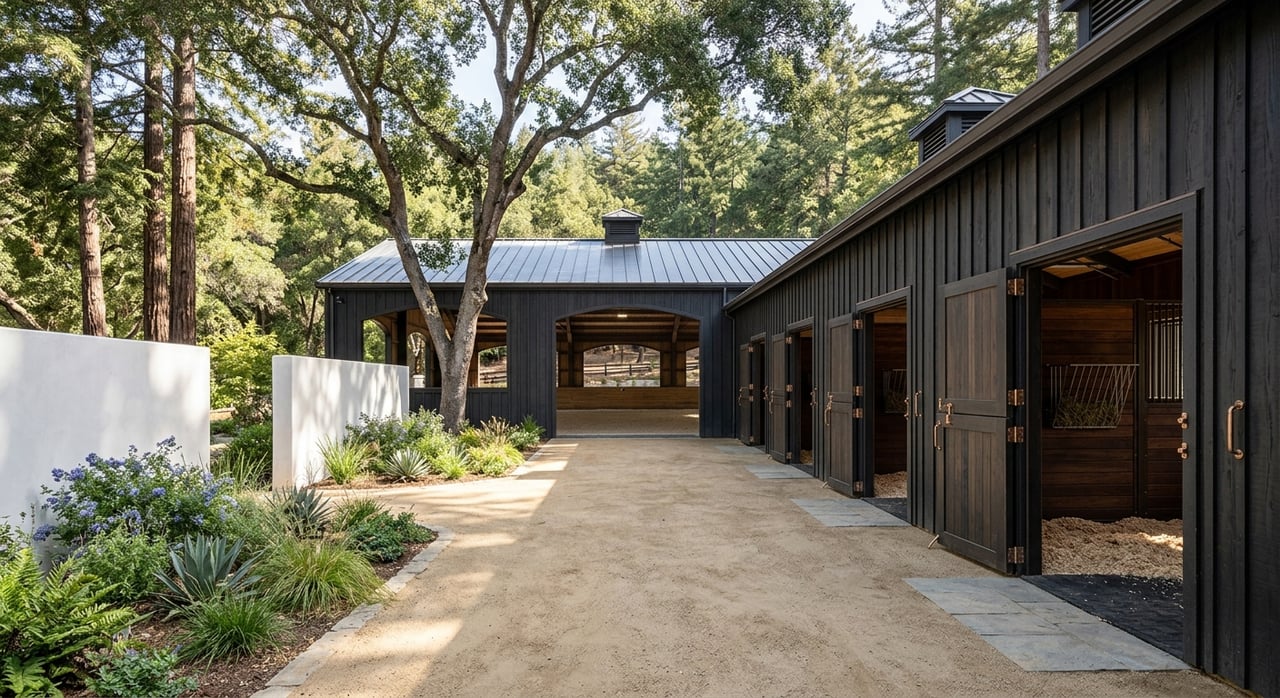
Thinking about a horse property in Woodside? It can be one of the most rewarding purchases on the Mid-Peninsula, but it also comes with more moving parts than a typical home search. If you want room for horses, access to legal riding routes, and a property that truly works day to day, you need to look beyond the barn and the views. This guide will help you understand the key rules, site issues, and practical tradeoffs so you can buy with more confidence. Let’s dive in.
Woodside has a long-standing equestrian identity, and that matters when you are buying with horses in mind. The Town maintains both a Trails Committee and a Livestock & Equine Heritage Committee, which reflects how closely horse use is woven into local land-use planning.
The local trail network is also a major reason buyers focus here. According to the Town’s horse-keeping guidance, Woodside’s trail system connects to Huddart Park, Wunderlich Park, Edgewood Park, and other Midpeninsula Regional Open Space District properties. That kind of connectivity can shape your daily riding experience as much as the home itself.
One of the biggest mistakes buyers can make is treating the stable permit like a minor paperwork item. In Woodside, it is not optional if you plan to keep horses on the property for more than 30 consecutive days.
The Town requires a Stable Permit for both private and commercial use, and permits renew each year. Just as important, an existing permit does not transfer to a new owner. If you are under contract on an equestrian property, permit status should be part of your due diligence from the start.
There is one helpful detail for buyers. If the prior permit was valid within the previous 12 months, the Town says a new owner may be able to skip a fresh inspection. Even so, you should confirm the property’s current permit history before closing.
If you are buying for personal horse use, the property needs to meet Woodside’s private stable standards. These rules affect whether the parcel can support your intended setup and horse count.
Key private stable requirements include:
The site layout matters too. Turnout areas must stay at least 50 feet from neighboring property lines and dedicated trail easements. Stable and turnout areas must also be on ground with less than 20% slope.
If a buyer plans to keep a stallion, there are added rules. The fencing must be six feet high and posted with warnings. These are the kinds of details that can affect whether an otherwise beautiful parcel really fits your needs.
Some buyers are looking at larger-scale horse operations, training use, or boarding. In Woodside, that moves you into a different category with more review.
Professional stables require a Conditional Use Permit and a minimum of five acres. The permitted number of horses is not set by a simple formula. Instead, the Town determines capacity based on site-specific factors such as road access, equestrian trail access, road conditions, streams and waterways, vegetation, watershed conditions, surrounding properties, slope, and visual impacts.
The code also allows up to 100% of permitted horses to be boarded and up to 100% to be used in training. If you are evaluating a property for this kind of use, entitlement review should happen early, not after you own it.
In Woodside, the riding infrastructure has its own placement rules. That means a property can have enough acreage on paper but still be limited by setbacks, slope, or access.
For example, no part of a constructed equestrian riding arena may be within 10 feet of a property line or ingress and egress easement. For professional stables, turnout and riding-ring fences must stay at least 50 feet from neighboring property lines, or 25 feet from a street parcel line.
Access is just as important as setbacks. The Town’s horse guide emphasizes wide driveways and gates that can accommodate trailers, veterinarians, feed deliveries, and fire response. A narrow entrance or awkward turning radius can create daily frustration and emergency risk.
Woodside buyers need to take wildfire planning seriously, especially in hillside areas. Parts of town, particularly in the western hillsides, fall within very high fire hazard severity zones on local mapping discussed by the Town.
Before closing, verify the parcel’s current fire hazard designation and what that means for ongoing ownership. You should also review defensible-space obligations and think through evacuation access, especially if you will be moving horses quickly in an emergency.
The Town’s 2025 horse evacuation guidance offers a useful planning framework. It recommends alert enrollment, horse ID, halters, water, hay, trailer readiness, and a posted evacuation plan. For equestrian buyers, emergency logistics are part of the property decision, not an afterthought.
Woodside’s site-review environment is unusually complex. The Town identifies faults, landslides, expansive soils, and wildfire exposure as major hazards of concern.
Its geologic hazard mapping includes fault-rupture zones, slope-instability areas, and expansive-bedrock zones. Construction near mapped faults can trigger Town geologist review. If you are considering future improvements like a new barn, expanded paddocks, or an arena, these issues can influence cost, timing, and feasibility.
This is where design and construction literacy becomes especially valuable in a home search. A property that looks flexible at first glance may carry constraints that only show up once you study the site conditions and approval path.
Utility service in Woodside is not uniform. That can make a big difference in long-term convenience and operating costs for an equestrian property.
Piped sewer service is available only in the Town Center Sewer District and the County’s Fair Oaks Sewer District. Parcels outside mapped sewer areas rely on septic systems. The Town’s housing element indicates sewer-served or sewer-eligible areas are concentrated in central, northern, and eastern Woodside.
Water service is also split by location, with mapped service areas served by California Water Service or Redwood City Water. Some parcels rely on wells, and if a property has a well, you should verify whether it can support your intended use, including troughs, barn washing, and pasture irrigation.
The purchase price is only part of the equation. Horse properties often carry a different ownership profile than standard residential homes.
Expected recurring costs may include:
A 2025 Town renewal letter referenced a $7 stable-permit renewal fee plus a $50 trails fee for each horse using the trails. Because fees can change, buyers should verify the current schedule during escrow.
Not every part of Woodside supports the same equestrian lifestyle. Your ideal area depends on whether you value utility convenience, riding access, larger layouts, or easier day-to-day management.
Parcels closer to Town Center and other central, northern, or eastern areas may offer more utility convenience because sewer-served or sewer-eligible locations are concentrated there. That can simplify some ownership logistics.
The tradeoff is often lot layout. Buyers may have less room for larger turnouts, barns, and trailer parking, which makes site planning and setback review especially important.
If your priority is the horse-country feel and stronger riding access, hillside areas often stand out. Trail access is strongest around places such as Huddart Park, Wunderlich Park, Kings Mountain Trail, Alambique Trail, Sand Hill Trail, and the Crystal Springs Regional Trail, where equestrian use exists on at least some segments.
These locations can offer a more immersive riding lifestyle, but they often come with steeper topography, greater hazard review, and more fire-access concerns. In other words, the experience can be exceptional, but the due diligence usually needs to be deeper.
This point is easy to miss. Being near open space does not automatically mean you have horse-legal trail access.
For example, Edgewood’s Sylvan Trail does not allow equestrian use. When you are buying, the real questions are whether the parcel has trail easements, how those easements function, and which nearby routes actually permit horses.
Before you make an offer on a Woodside equestrian property, confirm these items:
A careful review upfront can save you from expensive surprises later. On a horse property, the right fit comes from how the land functions, not just how the home presents.
Buying equestrian real estate in Woodside is often a blend of lifestyle, land use, and technical review. You are not only choosing a home. You are choosing a site that needs to work for horses, vehicles, utilities, safety planning, and possible future improvements.
That is why a disciplined buying process matters. When you combine local knowledge with a careful eye for layout, permitting, and site constraints, you are far more likely to buy a property that supports your goals now and protects value over time.
If you are considering an equestrian purchase in Woodside and want discreet, design-aware guidance through the search and due diligence process, connect with Jackie Schoelerman.
Stay up to date on the latest real estate trends.

Seller
July 23, 2026
Buyer
July 22, 2026

Buyer
July 20, 2026

Buyer
July 17, 2026
Seller
July 16, 2026
July 16, 2026
We Guide Homeowners through the complicated process of selling their home using our 4 Phase Selling Process and 3 Prong Marketing Strategy that alleviates their stress and moves them effortlessly to their next destination. Schedule a 15 Minute Complimentary Strategy Session Today