Wildfire seasons feel closer every year in the Santa Cruz Mountain foothills. If you own or plan to design a Woodside estate, you can dramatically improve safety without sacrificing beauty. With the right site planning, materials, and maintenance, you reduce ignition risk, support firefighter response, and protect long-term value. This guide shows you how to align your property with current California rules and Woodside’s local program, then prioritize upgrades that deliver the biggest impact. Let’s dive in.
What governs fire-wise design in Woodside
California sets the baseline and Woodside adds local requirements. State law requires you to maintain defensible space around structures, commonly out to 100 feet where property conditions allow, under Public Resources Code §4291. You can review the statute text for the core duties and updates to the ember-resistant immediate zone near buildings in PRC §4291 at the state site. See the legal text at PRC §4291.
At the same time, the Board of Forestry is formalizing a new 0 to 5 foot ember-resistant “Zone 0” right next to buildings and attachments. That zone will be enforced by local authorities as rulemaking is completed. Follow the state’s Zone 0 updates on the Board of Forestry’s defensible space page.
Woodside has adopted a local Fuel Mitigation Ordinance (No. 24-01) that requires defensible space on all improved parcels within the Woodside Fire Protection District. The ordinance designates an ember-resistant immediate zone, requires intensified treatment from 5 to 30 feet, and sets documentation rules at sale or transfer. Read the ordinance for compliance, timelines, and escrow requirements on the Woodside FPD Ordinance No. 24-01 page.
If you plan to build or remodel, California is consolidating wildfire-related construction rules into a standalone Wildland-Urban Interface Code, Title 24, Part 7. That code becomes effective with the 2025 cycle, with implementation beginning January 1, 2026. Designers and contractors should align exterior work with these WUI requirements. Learn more from the Building Standards Commission’s update at the WUI code rulemaking page.
Defensible space by design
Think of your estate in three concentric zones. Each zone changes how you landscape and where you place combustible items, which lowers the chance that embers or surface fire can ignite your home.
Zone 0: 0 to 5 feet
Your goal is to remove or replace combustibles right next to the structure.
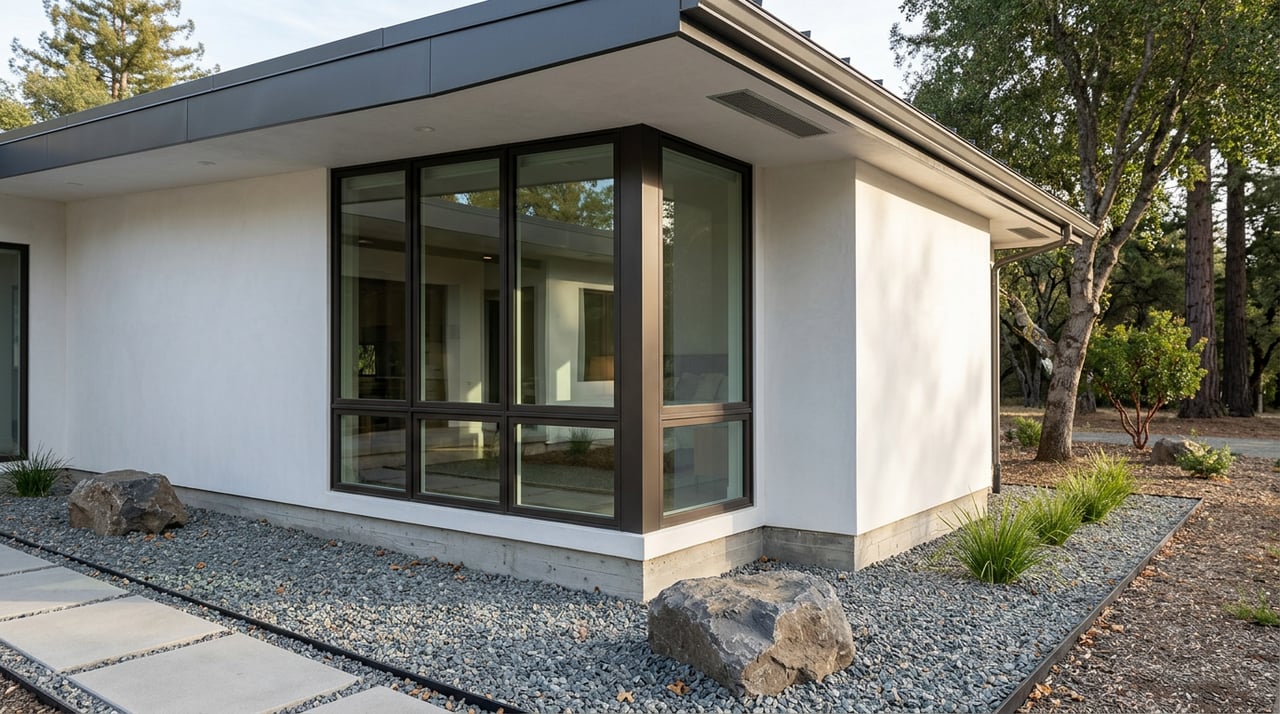
- Keep this area noncombustible. Use gravel, decomposed granite, or paving. Avoid wood mulch against walls.
- Move woodpiles, lumber, planters, and outdoor cushions outside Zone 0.
- Pay extra attention to decks, under-deck areas, and near windows and doors.
- Keep gutters and the roofline clear year-round. See Cal FIRE’s guidance on home hardening and maintenance.
For the regulatory basis and evolving guidance, monitor the state’s Zone 0 materials on the Board of Forestry page.
Zone 1: 5 to 30 feet
This is the “lean, clean, and green” area. You want minimal fuel and strong separation between plants.
- Prune shrubs and remove ladder fuels that let fire climb into tree canopies.
- Keep annual grasses mowed short and maintain irrigated, low-fuel plantings.
- Create horizontal and vertical spacing between plants and tree crowns.
- Place propane tanks, small sheds, or fuel storage away from the home and outside this zone when feasible.
For practical spacing guidance, start with Cal FIRE’s defensible space overview.
Zone 2: 30 to 100 feet
Reduce the total amount of fuel and break up continuity.
- Thin vegetation and remove dead or dying plants and debris.
- Maintain separation between groups of shrubs and trees to disrupt fire spread.
- Extend treatments out to 100 feet where property lines and terrain allow, or as directed by local officials.
The 100-foot perimeter is the typical state baseline under PRC §4291, subject to site conditions and local rules. Cal FIRE outlines Zone 2 strategies at its defensible space page.
Home hardening that matters most
Defensible space slows a fire. Home hardening stops embers from getting inside or igniting materials at the edges of your house. Focus on these high-impact upgrades, and check with Woodside FPD or your local authority having jurisdiction before permitting.
- Class A roof assembly. Roofs are a top priority. Consider noncombustible metal, tile, or Class A composition shingles. Cal FIRE explains roof and other measures on its home hardening guidance. (Cost: high if full replacement; low if maintenance)
- Ember-resistant vents. Replace attic, soffit, and foundation vents with products listed by the Office of the State Fire Marshal and tested to ASTM E2886. Do not rely on generic screen mesh for compliance. See the OSFM listings in the WUI Products Handbook. (Cost: low to moderate)
- Noncombustible or ignition-resistant cladding. Favor fiber-cement, stucco, metal, masonry, and sealed joints. Eliminate combustible trim that traps embers. Confirm assemblies in the WUI Products Handbook. (Cost: moderate to high)
- Windows and doors. Use multi-pane or tempered glazing where required, and seal gaps at door thresholds and garage doors with gaskets. Cal FIRE covers openings in its home hardening overview. (Cost: low to high depending on scope)
- Decks and attachments. Replace combustible boards adjacent to the house with noncombustible or listed assemblies, enclose undersides, remove storage under decks, and add metal flashing at deck-to-wall intersections. See Cal FIRE’s deck guidance. (Cost: moderate)
- Gutters and roofline upkeep. Install metal guards where appropriate and schedule regular cleanings. Debris buildup is a common ignition pathway. Details at Cal FIRE’s home hardening page. (Cost: low)
Access, water, and utilities
A fire-wise estate supports firefighter operations as well as home survival.
- Apparatus access. Driveways and private roads must allow fire vehicles to reach your structures safely, with adequate width, turning space, and vertical clearance. The exact thresholds are set by the local fire code official. Engage the Woodside Fire Marshal early when designing or modifying access.
- Water supply. If your home sits beyond hydrant coverage or recommended hose pull distances, you may need supplemental on-site water such as a cistern, truck-fill point, or dry hydrant. NFPA 1142 is the reference used to size rural and suburban water supplies. Many jurisdictions cite private minimums in the 5,000 to 10,000 gallon range for a single home when public hydrants are not available. Review the standard and consult WFPD on sizing and connections using the NFPA 1142 reference.
- Utilities and hardscape. Create fuel breaks along long driveways and around fuel tanks. Place propane and fuel storage with required clearance and signage. Coordinate equipment siting and vegetation clearance using Cal FIRE’s home hardening guidance.
Phasing and cost-savvy planning
Not every upgrade has to happen at once. Start with low-cost, high-value actions and build from there.
- Immediate, low cost. Clean roofs and gutters, remove combustibles from Zone 0, and move woodpiles and debris away from structures. See Cal FIRE’s home hardening checklist.
- Seal openings. Install ember-resistant vents and seal gaps at eaves and around penetrations. Upgrade door thresholds and garage gaskets. Confirm listed products in the WUI Products Handbook.
- Treat vulnerable materials. Replace combustible siding or add ignition-resistant details at vulnerable intersections. Retrofit deck surfaces near the house with noncombustible or listed assemblies. Verify listings in the WUI Products Handbook.
- High-impact investments. Replace wood-shake roofs with Class A assemblies and, where needed, install on-site water storage with fire department connections. See Cal FIRE’s home hardening overview.
Studies note that full WUI upgrades can add to construction budgets, but many smaller hardening actions are inexpensive. Use state resources and local contractors to develop accurate bids for your home’s assemblies. For broader context, see the Office of the State Fire Marshal’s program overview on building in the wildland.
Resale, escrow, and insurance impacts
Woodside’s Ordinance No. 24-01 requires sellers to document fuel mitigation compliance at sale or to include specific escrow language. If you plan to list, build time into your schedule to complete defensible space work and gather records. Review seller obligations on the Woodside FPD ordinance page.
Insurers increasingly consider home hardening and defensible space when underwriting or setting premiums. Once upgrades are complete, notify your carrier and keep documentation for both insurance and future buyer disclosures. For the policy context behind defensible space and Zone 0, see the Board of Forestry’s program page.
Finally, explore local funding support. The Town of Woodside offers a Defensible Space and Home Hardening Matching Fund program to help offset private property costs. Review eligibility and how to apply on the Town program page.
Start here: a Woodside action plan
- Walk your structure line and create a clean, noncombustible Zone 0. Replace wood mulch with gravel, pull cushions and planters back, and clear gutters.
- In Zone 1, prune shrubs, lift low tree branches, and mow annual grasses short. In Zone 2, thin and remove dead vegetation out to 100 feet where possible.
- Inventory building openings. Specify ember-resistant, OSFM-listed vents and seal gaps at doors, garages, and eaves.
- Assess roof, cladding, and decks. Note where replacements or ignition-resistant assemblies will reduce risk the most.
- Meet with the Woodside Fire Marshal or a qualified contractor to confirm permitting triggers and the local interpretation of WUI rules.
- If needed, plan access and water improvements in consultation with WFPD, including any on-site cistern, fire department connection, signage, and turnarounds.
- Apply to the Town’s matching fund program for eligible work.
- Keep before-and-after photos, invoices, and product listings for insurance, future resale, and escrow documentation.
When you are ready to align your property improvements with market timing, our team can help you prioritize upgrades that protect value and present your home at its best. For discreet, design-forward representation and pre-list guidance, connect with Jackie Schoelerman. Schedule a Private Consultation.
FAQs
What should I do within 0 to 5, 5 to 30, and 30 to 100 feet of my Woodside home?
- Zone 0: keep the first 5 feet noncombustible and clear of wood mulch and combustibles; Zone 1: prune, remove ladder fuels, mow grasses, and space plants; Zone 2: thin and remove dead vegetation to disrupt fuel continuity, consistent with Cal FIRE’s defensible space guidance.
How does Woodside enforce defensible space and when do inspections occur?
- Woodside’s Fuel Mitigation Ordinance No. 24-01 sets standards, allows phased compliance for hardship, and requires documentation at sale; the District conducts inspections and follows its enforcement process outlined in the ordinance.
Will home hardening change my homeowner’s insurance in Woodside?
- Insurers increasingly consider defensible space and hardening; contact your carrier, complete upgrades, and keep documentation. State initiatives emphasize Zone 0 and defensible space, as outlined by the Board of Forestry.
Do I need to remove mature oaks or heritage trees to comply?
- The ordinance recognizes environmental considerations and allows modifications or phased compliance where needed; healthy, well-spaced trees can often be retained while meeting defensible space goals. Review details in the Woodside FPD ordinance.
What new wildfire construction rules should I expect for remodels or new builds?
- California has consolidated WUI requirements into Title 24, Part 7, effective with the 2025 code cycle and implementing January 1, 2026; plan exterior work now to align with the state’s WUI code and confirm local permitting with Woodside FPD and the building department.