Palo Alto Neighborhoods Through Their Architecture
June 18, 2026
June 18, 2026
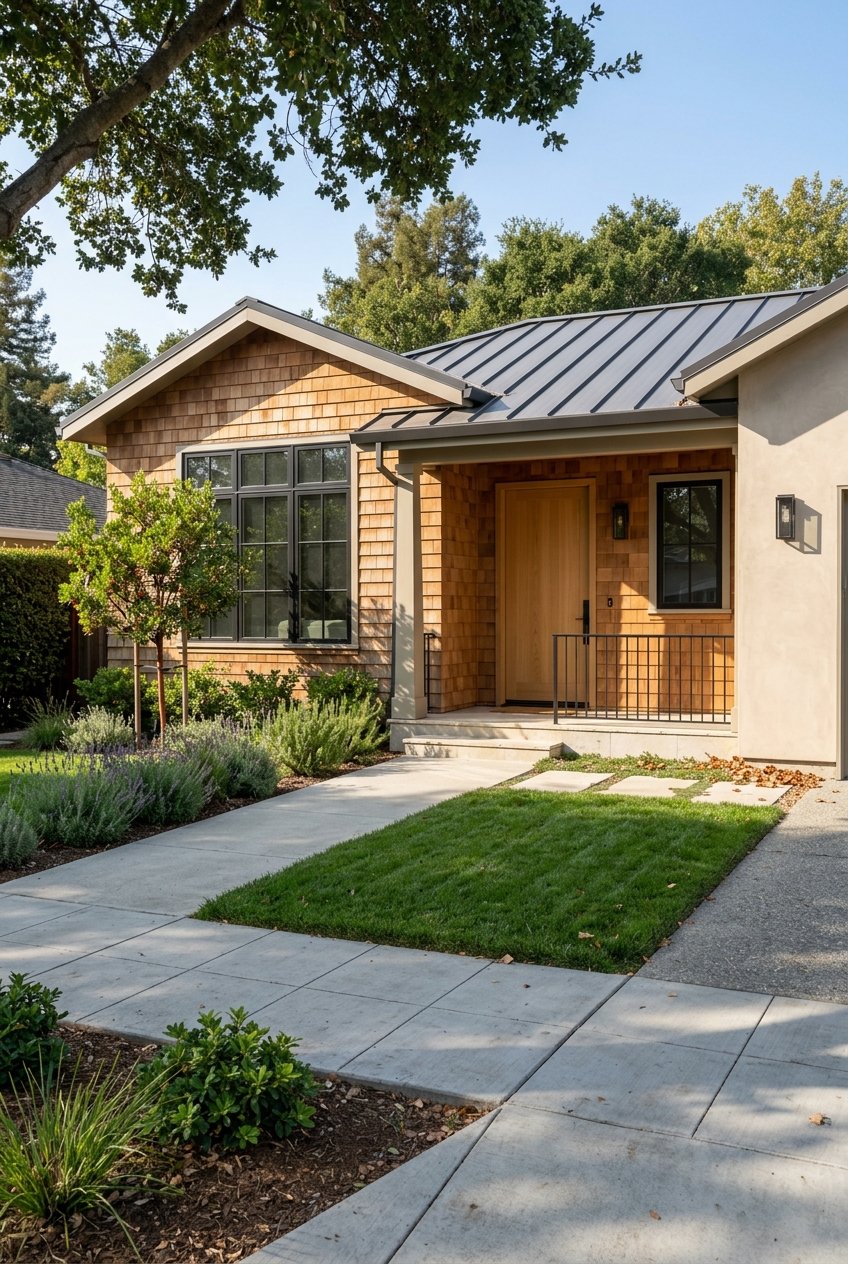
Wondering why one Palo Alto street feels academic and leafy while another feels open, modern, and almost resort-like? If you are buying, selling, or simply trying to understand what gives each part of the city its identity, architecture tells a surprisingly clear story. When you know what to look for, you can read Palo Alto block by block through rooflines, lot patterns, mature trees, and the way homes meet the street. Let’s dive in.
Palo Alto is best understood as a sequence of building eras rather than one signature style. City history connects the area to Ohlone settlement, Spanish and Mexican land grants, the founding of Palo Alto in the 1890s, the annexation of Mayfield in 1925, and a major postwar housing boom.
That timeline still shows up in the built environment today. Older neighborhoods cluster closer to Stanford and downtown, while many of the city’s modernist tracts spread south of Colorado Avenue during the postwar decades. In practical terms, that means street trees, setbacks, lot size, and roof shape often tell you as much about a neighborhood as the formal style name.
Professorville is one of the clearest windows into early Palo Alto. The city describes it as one of the earliest areas to develop in town, a roughly 65-acre historic district southeast of downtown with a regular grid of ten streets, a verdant canopy, and nearly 200 properties.
Architecturally, the neighborhood is varied rather than uniform. You will find Queen Anne, Craftsman, Colonial Revival, Spanish Colonial Revival, Tudor Revival, and later infill. That mix gives Professorville a layered feel that reflects the city’s growth over time, not a single frozen moment.
College Terrace began in 1887 on subdivided land near Stanford University. Its streets were named alphabetically after colleges and universities, which gives the neighborhood an easy-to-read layout before you even focus on the homes.
Compared with Professorville, College Terrace tends to read as smaller and more cottage-like. Local heritage sources describe Queen Anne cottages, vernacular cottages, rustic cottage courts, and a California Colonial library building. If you are drawn to early Palo Alto at a more modest scale, this neighborhood captures that hand-crafted feel.
Old Palo Alto, originally known as the Seale Addition, is generally identified as the area bounded by Alma, Middlefield, Embarcadero, and Oregon Expressway. Heritage sources describe it through its mature trees, gracious streets, and well-preserved homes.
Its architectural story stretches across more than one era. Alongside early 20th-century homes, the area also includes later work by Palo Alto designer Marcus Stedman, whose postwar houses were described as echoing Carmel cottages and early California Ranch homes with low shake roofs, patterned brickwork, and expressive wood details. That gives Old Palo Alto a refined, long-evolving residential character.
Crescent Park was first developed in 1887 and sits between downtown Palo Alto and the US 101 corridor, with University Avenue running through the neighborhood. It is generally bounded by San Francisquito Creek, Newell Road, Channing Avenue, and Middlefield Road.
The architecture here often feels grander than in some other early neighborhoods. Heritage materials describe manors, mansions, and Italian Renaissance homes, with most houses built between 1904 and 1929. As you move through the area, the scale and form often read as more estate-like while still remaining closely tied to the city core.
Palo Alto is nationally recognized for its Eichler legacy. The city’s design guidelines identify Green Gables and Greenmeadow as National Register historic districts and note that Palo Alto contains well over 2,000 Eichler residences.
The architectural vocabulary is distinct and easy to spot once you know it. Look for post-and-beam construction, broad eaves, simple materials, interior courtyards, and full-height glazing designed to support indoor-outdoor living. These homes reflect a very different chapter of Palo Alto’s growth than the earlier neighborhoods near Stanford and downtown.
Greenmeadow helps explain why the Eichler story in Palo Alto feels bigger than individual houses. Heritage sources describe the 1954 community center as the social center for a 270-home Eichler development designed by Jones and Emmons, with landscape work by Thomas Church.
That detail matters because it shows how the neighborhood was planned as an environment. Full-height sliding glass doors, strong links between house and landscape, and a community-centered layout all contribute to the modernist feel on the ground.
Palo Alto’s mid-century architecture is not limited to one small pocket. Heritage inventories identify Eichler-related streets and tracts across the city, including Parkside Drive, Wildwood Lane, Ivy Lane, Greer Road, Greenmeadow Way, Charleston Road, and Ben Lomond Drive.
For you as a buyer or seller, that means mid-century Palo Alto is a network rather than a single subdivision. The style appears across multiple areas, creating a broader architectural chapter that still shapes how large parts of the city feel today.
On the ground, the mid-century neighborhoods often read as flatter, more open, and more inward-facing than the prewar districts. That impression is supported by the documented design features: low-slung rooflines, glazed rear elevations, interior courtyards, and planning centered on shared community life.
A helpful non-residential example is Edgewood Plaza, described by local heritage sources as Joseph Eichler’s only shopping center and designed by A. Quincy Jones to complement the surrounding Eichler neighborhood. It reinforces the idea that Palo Alto’s modernist areas were conceived as more than rows of houses.
Residential architecture tells most of the story, but Palo Alto’s civic buildings help complete it. The Rinconada area is a strong example. The city’s long-range plan says Rinconada Park spans 11.8 acres and includes tennis courts, the Junior Museum and Zoo, the city’s only public aquatic facility, and a mature canopy of redwoods and oaks.
This area also connects to the Lucie Stern Community Center. The city library’s history notes that Lucie Stern’s philanthropy helped make the Children’s Library, Children’s Theater, Junior Museum, Community Center, and Rinconada Pool possible. These places shape the everyday rhythm of the surrounding area just as much as the homes do.
The Children’s Library is also an architectural landmark in its own right. The Palo Alto City Library describes it as the oldest free-standing children’s library in the country, built in Spanish Colonial Revival style by Birge and David Clark, with a Mission tile roof and a garden-focused setting.
Mitchell Park reflects a different era of Palo Alto’s development. A city memorandum describes it as a 21-acre community park whose original 1957 layout by Eckbo Royston and Williams received national and international attention.
Today, the park includes play areas, picnic sites, courts, turf, a dog run, and a wild area. The Mitchell Park Library adds another modern layer, with a joint library and community center building that is LEED certified and includes living walls, solar panels, local landscaping, and natural heating and cooling systems.
For a compact downtown example, the Ramona Street Architectural District stands out. Heritage sources describe it as an architecturally unified commercial district of eight structures built from 1924 to 1938, mostly in Monterey Colonial and Spanish Colonial Revival styles.
This matters because it ties the neighborhood story to downtown itself. Palo Alto’s architectural identity is not limited to residential streets. Its commercial core also carries a clear style language and human-scale character.
If you are touring neighborhoods, a simple framework can help. The strongest contrast is often between the early, tree-shaded neighborhoods near Stanford and downtown and the more open postwar tracts that came later.
In broad terms, Professorville and College Terrace often feel older, denser, and closely tied to Palo Alto’s early academic history. Old Palo Alto and Crescent Park tend to read as gracious, larger-lot neighborhoods with a more estate-like presence. The Eichler areas feel more modern, indoor-outdoor, and socially planned.
That does not mean any neighborhood is locked into one era. City guidelines make clear that historic areas can evolve through compatible new construction and additions, and Palo Alto’s Eichler neighborhoods also continue to change while retaining their core qualities.
If you are buying in Palo Alto, understanding architectural context can help you narrow your search faster. You may find that your preferences are less about price point or square footage alone and more about how a neighborhood lives day to day, from cottage-scale streets near Stanford to larger prewar homes or mid-century indoor-outdoor design.
If you are selling, architecture helps shape positioning. A home’s value story is often tied not just to its features, but to how it fits into the larger design language of its neighborhood, whether that means historic character, estate presence, or modernist pedigree.
In a market like Palo Alto, that kind of nuance matters. Design literacy, local context, and thoughtful presentation can help buyers understand what makes a property distinctive and help sellers present that story with clarity.
If you want help interpreting how architecture, neighborhood context, and presentation affect your next move in Palo Alto, connect with Jackie Schoelerman for a private consultation.
Stay up to date on the latest real estate trends.
October 22, 2026

October 13, 2026

Seller
October 8, 2026
October 8, 2026
Seller
October 5, 2026
Seller
October 1, 2026
We Guide Homeowners through the complicated process of selling their home using our 4 Phase Selling Process and 3 Prong Marketing Strategy that alleviates their stress and moves them effortlessly to their next destination. Schedule a 15 Minute Complimentary Strategy Session Today