The Menlo Park Address That Isn't Menlo Park
August 27, 2026
August 27, 2026
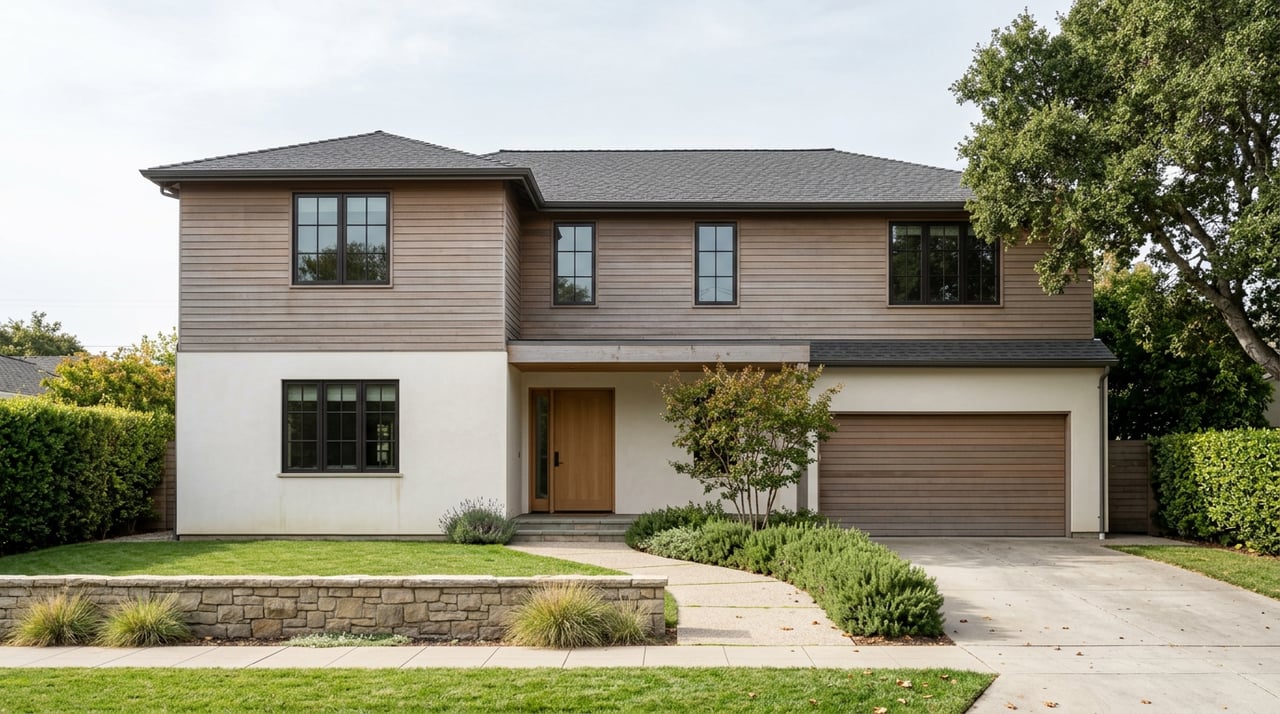
A young mother pushed a stroller along a shaded street off Alameda de las Pulgas on a recent afternoon, and a driver clipped past close enough that the wind lifted the baby's blanket. The street has no sidewalk. It has never had one. The homes on either side carry Menlo Park mailing addresses, sit inside the 94025 ZIP code, and look exactly like the rest of University Heights. But the city of Menlo Park has no authority to fix that street, because the street isn't in Menlo Park. It sits in the West Menlo Triangle, a roughly 14-acre pocket of about 60 houses that belongs to unincorporated San Mateo County. Residents there have been trying to annex into the city for more than a decade. Longtime resident Lynne McClure put the arrangement bluntly to the San Francisco Chronicle this month: "Our lives are in Menlo Park, but we can't vote there."
That single sentence is the whole thesis of this piece. If you are comparing homes across Menlo Park's neighborhoods, the address on the listing sheet tells you less than you think. Two houses a block apart can answer to two entirely different governments, and that difference shows up in permits, tree removal rules, transfer taxes, and who you call when the sewer backs up. Buyers who only compare school boundaries and lot size are missing a layer of due diligence that has nothing to do with the house and everything to do with the parcel it sits on.
Menlo Park is not one contiguous municipal footprint. West Menlo Park, the unincorporated strip that runs along Alameda de las Pulgas, nearly separates the city's Sharon Heights neighborhood from the rest of the city proper. It has done so for decades, and it is governed not by Menlo Park's city council but by the San Mateo County Board of Supervisors, with permitting authority resting in the county's Planning and Building Department rather than the city's Community Development Department.
The West Menlo Triangle is a smaller, more specific case inside that same unincorporated fabric, and it is the one currently making news. San Mateo County's own planning records list West Menlo Park among the unincorporated communities within Menlo Park's sphere of influence, which is the formal way of saying: adjacent to the city, shaped by it, but not part of it. Menlo Park's city council took a step toward changing that status for the Triangle this past January, agreeing to waive roughly $60,000 in annexation-related application fees. The effort is now, by local officials' own account, the longest-running annexation attempt in San Mateo County's history. Resident Greg Faris, who has lived along the unincorporated stretch of Santa Cruz Avenue for 31 years, has spent much of that time pushing for the same outcome, motivated in part by a pedestrian death on that street in 2004.
None of this shows up on a listing photo. It shows up when you pull a permit.
If a house sits inside city limits, its remodel, addition, or ADU application goes through the City of Menlo Park's Building Division, under the city's own fee schedule, plan-check process, and local code amendments. If the same style of house sits in West Menlo Park or the West Menlo Triangle, that identical project routes to San Mateo County's Planning and Building Department instead, with a different intake process and a different set of local amendments layered onto the same state building code.
The gap isn't limited to paperwork routing. A few specific rules only reach as far as the city line:
None of this makes one side of the line better than the other for every buyer. A household planning a major addition or ADU might actually prefer the county's process for reasons specific to their project. The point is that the two paths are genuinely different, and a buyer who assumes uniform city rules across every Menlo Park-addressed listing is working from an incomplete map.
Jurisdiction is the first hidden layer. Infrastructure age is the second, and it tracks the neighborhood, not the era of the listing photos.
Homes in Allied Arts, the Willows, and other downtown-adjacent pockets were largely built in the 1920s and 1930s, and many still carry their original clay sewer laterals, now 80 to well over 100 years old. The postwar tracts in Belle Haven and Suburban Park were built a couple of decades later, in the 1940s and 1950s, and typically carry Orangeburg pipe or clay from that era instead. Neither age bracket is disqualifying, but both carry real repair odds that a fresh coat of paint won't reveal.
Here is the part that catches buyers off guard: Menlo Park's sanitary sewer service is provided by the West Bay Sanitary District, which does not appear to require a point-of-sale lateral compliance certificate the way some neighboring cities do. In cities that mandate one, a failing lateral becomes a seller's problem before the sale closes. In Menlo Park, that inspection is optional unless a buyer or their agent specifically orders it, which means the condition of an 80-year-old clay lateral can ride through escrow untested if nobody asks. For a buyer comparing a 1930s Allied Arts bungalow against a 1950s Belle Haven ranch, that's a real cost variable, not a cosmetic one, and it belongs in the same conversation as the roof and the panel.
Put the two threads together and a pattern emerges. The obvious comparisons, price per square foot, school attendance boundary, distance to the Caltrain station, are the ones every portal already surfaces. The comparisons that actually change your closing costs and your first-year renovation budget are the ones that don't show up until you ask directly:
Menlo Park's market gives buyers little room for guesswork on timing. Redfin's tracking over the three months ending in June 2026 showed Menlo Park homes drawing an average of four offers and selling in about 15 days. In a market moving that fast, the due diligence window is short, and the questions above are the ones worth asking before you write an offer, not after you're in contract.
Does living in unincorporated West Menlo Park mean I'm not really a Menlo Park resident? Your mailing address, ZIP code, and daily life point to Menlo Park. Your property tax bill, permitting authority, and voting jurisdiction point to San Mateo County. Both are true at once, which is exactly the confusion residents like Lynne McClure and Greg Faris have been trying to resolve through annexation.
Will the West Menlo Triangle actually be annexed into the city? The effort has been active for more than a decade and the city's recent fee waiver was a real step forward, but annexation has not been completed. Anyone buying in that pocket today should evaluate the property as unincorporated county land, not as a city parcel in waiting.
Should I skip a sewer lateral inspection since it's not required at sale? The absence of a mandatory certificate is precisely why an independent inspection matters more, not less, especially in the older sections of Allied Arts, the Willows, or any lot where the age of the lateral hasn't been documented.
If you're weighing a specific address against its neighbors and want a clear read on which government actually governs it, The Schoelerman Group can walk the parcel history, permit path, and infrastructure record with you before you write an offer. Schedule a Private Consultation to start with the facts that actually belong in your decision.
Stay up to date on the latest real estate trends.

Seller
September 18, 2026

Buyer
September 17, 2026

Buyer, Seller< Main
September 15, 2026
Buyer, Seller< Main
September 14, 2026
Seller
September 14, 2026
September 10, 2026
We Guide Homeowners through the complicated process of selling their home using our 4 Phase Selling Process and 3 Prong Marketing Strategy that alleviates their stress and moves them effortlessly to their next destination. Schedule a 15 Minute Complimentary Strategy Session Today