Is It Still a Seller's Market? Here's What the Data Says.
Keeping Current Matters June 18, 2026
Buyer, Seller< Main

Keeping Current Matters June 18, 2026
Buyer, Seller< Main
Remember a few years back when sellers held all the power and buyers were stuck offering way over asking or waiving inspections just to get a chance at the house? In many markets, those days are behind us.
While it’s going to vary by area, more metros are slowly shifting to favor buyers, and the market is starting to look a lot more like a two-way street again.
And that balance is something we haven’t had in a while.
Whether you're buying or selling, here's what you need to know about what's changing and what it means for your move.
The national data tells an interesting story right now. According to Realtor.com:
"The national housing market is balanced but gradually loosening as the cycle moves in a more buyer-friendly direction . . ."
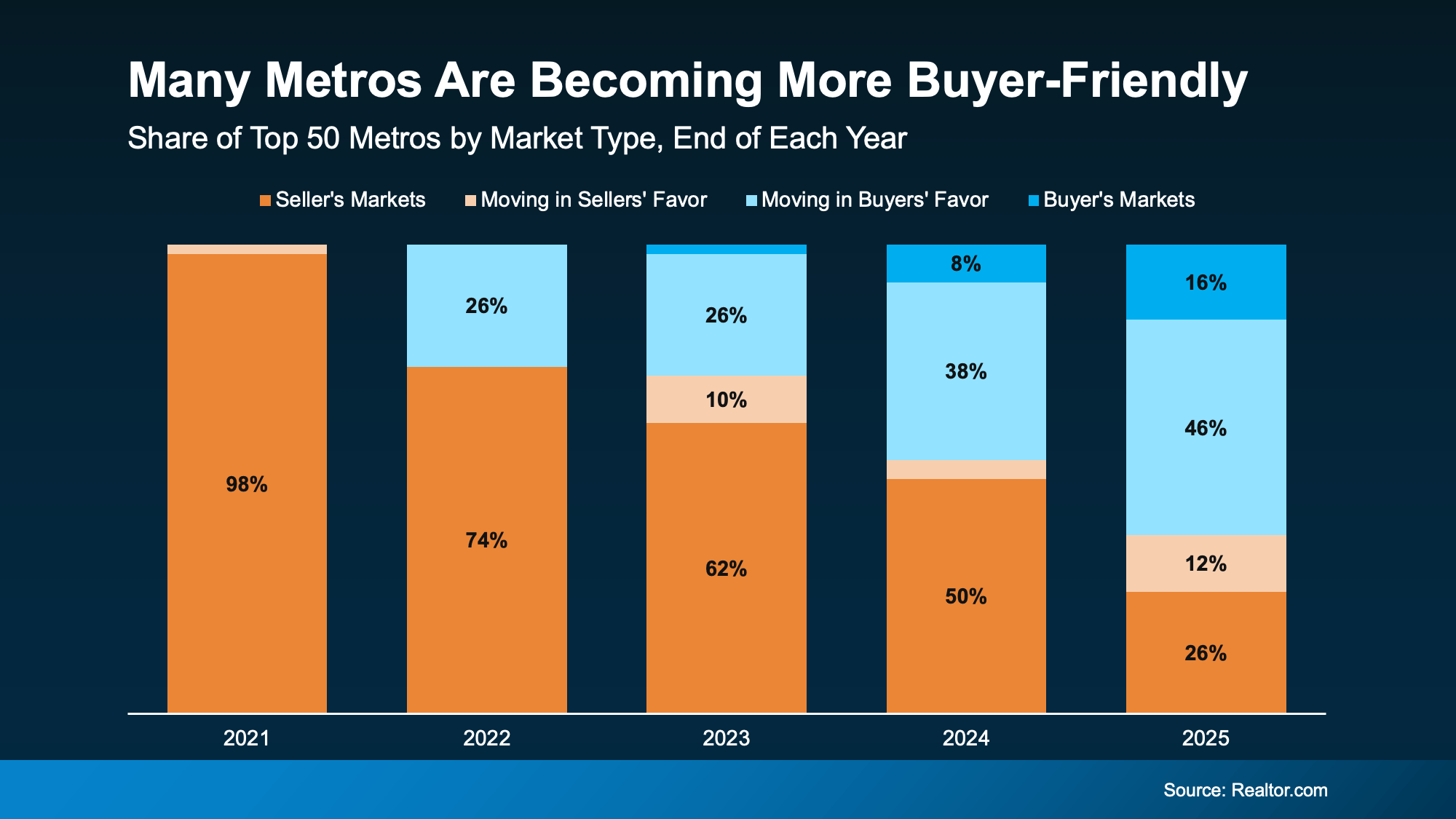
That’s because, over the past few years, more and more metros have been flipping back to more buyer-friendly terms as inventory’s grown. And when you zoom in on the latest Realtor.com data for the top 50 metro markets over time, the trend becomes really clear (see graph below).
Back in 2021, almost all major metros were seller's markets. By the end of 2025, only 1 in 3 still favored sellers. That's an obvious shift.
And that changes how the market is going to feel for everyone. Sellers shouldn’t still expect 2021 conditions, but neither should buyers. At least, not generally speaking.
That said, who has the power ultimately depends on where you live. While more metros are leaning buyer-friendly lately, there are still plenty of strong seller's markets right now, too.
It really comes down to how much housing supply and demand there is in your area. And that varies enormously by region.
Sun Belt cities like Austin, Tampa, and San Antonio saw major building booms in recent years, giving buyers more options and more negotiating room. Meanwhile, cities in the Northeast and Midwest – think Rochester, Hartford, and Buffalo – didn't see that same wave, so inventory stayed tight and competition stayed fierce. As Jeff Ostrowski, Housing Analyst at Bankrate, explains:
“The formerly hot Sun Belt markets have cooled, while the Northeast and Midwest have stayed hot. The big driver here is construction activity. The softest markets now [have] experienced big booms that spurred new building, and that has led to a large supply of new and existing homes on the market in those places.”
To find out who has the power in your local market, talk to an agent. Because knowing what’s happening locally is going to be the key to setting the right strategy for your move.
If the market is working in your favor, great. Lean in and use it to your benefit. But if it’s not, all hope isn’t lost. Your agent can help you figure out how to approach any market.
Here's some practical advice if there’s a mismatch between your goal and local market conditions.
If you're buying in a seller's market:
If you're selling in a buyer's market:
Right now, local markets are moving in very different directions. And your strategy as a buyer or seller should reflect your market.
Want to know which way our local market is leaning and what that means for your move? Let's connect.
Stay up to date on the latest real estate trends.
Buyer, Seller< Main
June 18, 2026

June 18, 2026

Buyer
June 17, 2026

Buyer
June 15, 2026

Seller
June 15, 2026

Buyer
June 10, 2026
We Guide Homeowners through the complicated process of selling their home using our 4 Phase Selling Process and 3 Prong Marketing Strategy that alleviates their stress and moves them effortlessly to their next destination. Schedule a 15 Minute Complimentary Strategy Session Today